Pt. III: What can you do as an Angler?
The info from parts II and I was intended to give people a snapshot of what is going on out there in our streams, and to learn a bit more about Bull Trout. Bearing in mind the threats Bull Trout face, it is crucially important, that we as anglers, do everything we can to mitigate, and eventually eliminate the threats caused by angling pressure. I have organized this framework into four key components.
Strictly adhere to C & R and bait ban regulations.
This one is first because it is vitally important and there is simply no excuse for not knowing the regulations. Get it out of your heads. Bull Trout are not for keeping. And using bait is harmful for fish. Know how to identify Bulls, and safely release them. Purchase a license before you go fishing and read the regulations for any water body you intend to fish.
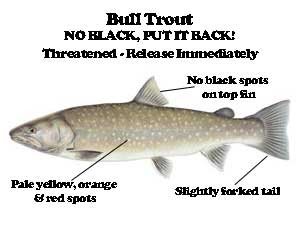
Use single, barbless hooks (pinch your barbs), and use proper fish handling techniques.
This can not be over-stated. How we treat our fish and remove the hooks can be the difference between life and death in some cases. Any angler targeting Bulls must be familiar with how to safely release a fish once caught. Having pinched barbs will greatly aid you in this process, as the hook will pop out easily.
Proper fish handling includes:
- Do not fight the fish for longer than necessary, especially if stream temperatures are high
- Avoid over-handling of the fish; keep the fish wet whenever possible and wet your hands before touching any fish
- Avoid damaging any organs; do not touch the gills/gill plate, do not squeeze fish, and do not hold fish by the jaw
- Allow fish to recover energy before releasing it by facing it into the current and letting it swim away when ready
Having pinched barbs and carrying pliers/forceps will greatly aid you in getting the hook out of the fishes mouth quickly. If you are struggling to get hook out, continually let the fish recover in cool water between attempts, and cut your line if hook cannot be removed without excessive stress to fish.
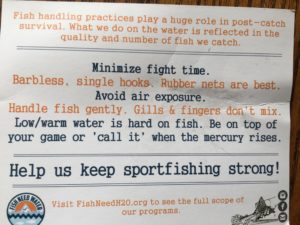
Proper fish handling is particularly important when stream temperatures are warmer than normal, from extreme heat, drought, or low water levels, all of which will warm water and decrease dissolved oxygen. In many cases, a fish may be handled poorly and swim away, seemingly fine after being released; however, many of these fish will die after being released, due to damaged organs, loss of blood, or from not being able to recover their oxygen levels. During times of heat and high water temps, all fish need to be thoroughly revived in the coldest, fastest moving water before being released. Or even better, avoid fishing at all.
Use a proper setup and strong tippet, especially if large bulls are your target.
This one is a pet peeve of mine. Don’t go out fishing with a 3-5wt glass rod if you know you are targeting Big Bulls. Your instagram photo with your Rod completely bent over (#GetBent) might look really cool, but the results for those Bull Trout could be quite the opposite.
A Big Bull can be quite hefty and usually takes some wrangling to convince it to move from the bottom. It takes far to long to play and net a large bull if using a lightweight set-up, which will completely drain the fish of all its energy. Just this alone can have significant impact on a fish; if that fish is then poorly handled, or the water is warm, it will very likely die. So don’t do it. If all you brought was the 4-wt, consider leaving the big streamer in the box and targeting cutthroat or rainbows instead.
Do not fish tributary streams during Bull Trout spawn (September through October), and avoid targeting Bulls during this time.
Spawning is rigorous work for a trout, and fishing pressure during this time can lead the death of many mature, spawning aged fish, critical for maintaining the population. This one is important to reinforce because most streams remain open during the Bull Trout Spawn. It is up to you to as an angler to take ownership and be aware of and avoid small streams if possible. Any time after September, anglers on small streams need to be aware of the Bull Trout spawn. If you do find yourself fishing a likely Bull Trout spawning ground, do not use streamer patterns or target Bulls (especially fish on redds), be cognizant of where you are wading and be sure to avoid redds. If you accidentally hook a Bull Trout, be extra diligent with the safe handling techniques listed above.
If you see people fishing for Bull Trout in small streams in September / early October, kindly remind these people of Bull Trout spawning and recommend they fish elsewhere or target other species.
On top of all of that, the last thing you can do is kindly enlighten others who might not know the about the above practices, and raise awareness for the Bull Trout every opportunity you get. Maybe that is by sharing this post with your friends (highly reccomended!), refreshing your memory by chatting with your buds on the drive out for day you plan to fish for Bulls, or maybe its kindly checking in on that fisherman with a spin rod and a cooler, and making sure he’s using the cooler for beer, and not Bulls. And maybe check to be sure he isn’t using a triple barbed hook, or chucking bait, or fryin’ em up on the BBQ. Cause quite frankly, there isn’t enough for all of us!
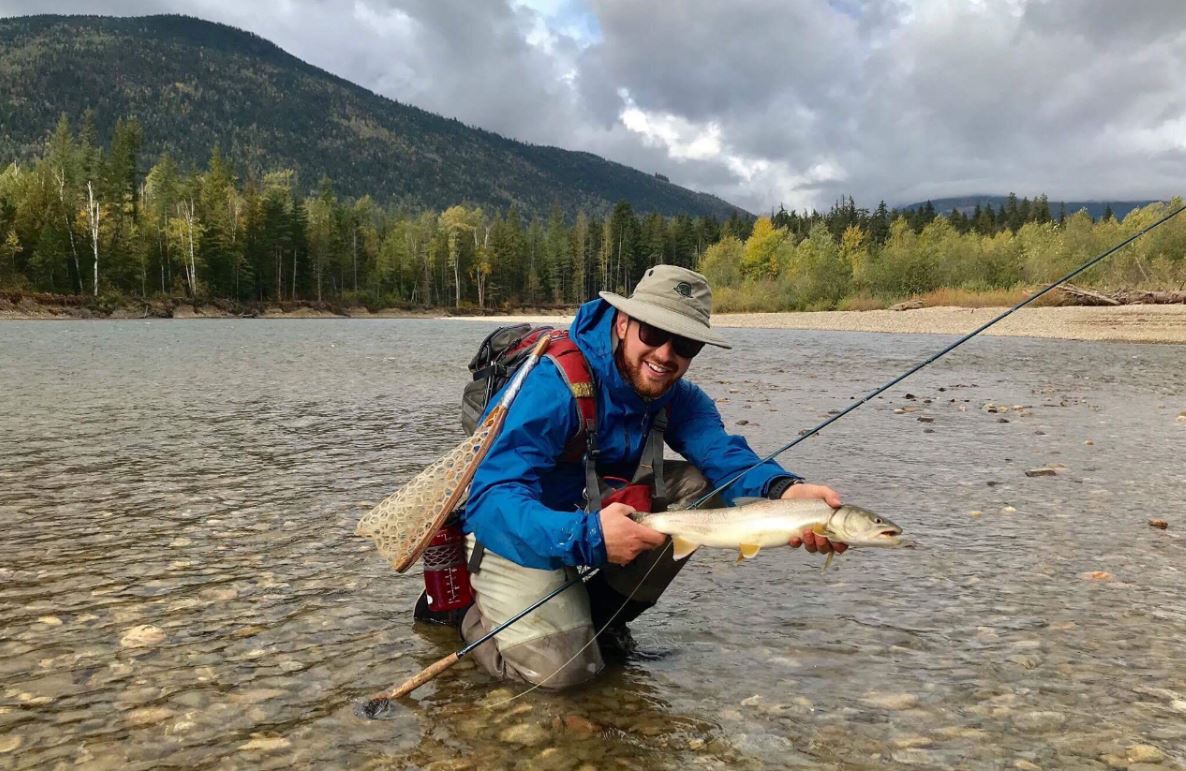
So what do you think? Do Bull Trout in Alberta have a bright future? Have populations rebounded significantly in the past 14 years? Are people starting to get it? Is there something I missed, or haven’t considered? I want to hear from you!
That concludes the series, ‘State of our Trout: Bull Trout’ I sincerely thank everyone who took the time to read through, I hope you enjoyed learning about the Bull Trout and have found value in this post, regardless of how experienced of an angler you are.
Tight Lines!
Resources:
2012-2018 Bull Trout Conservation Management Plan
Bull Trout Population Assessment in the Upper Oldman River Drainage, 2009
Two Fish, One Fish, No Fish: Alberta’s Fish Crisis – Lorne Fitch